

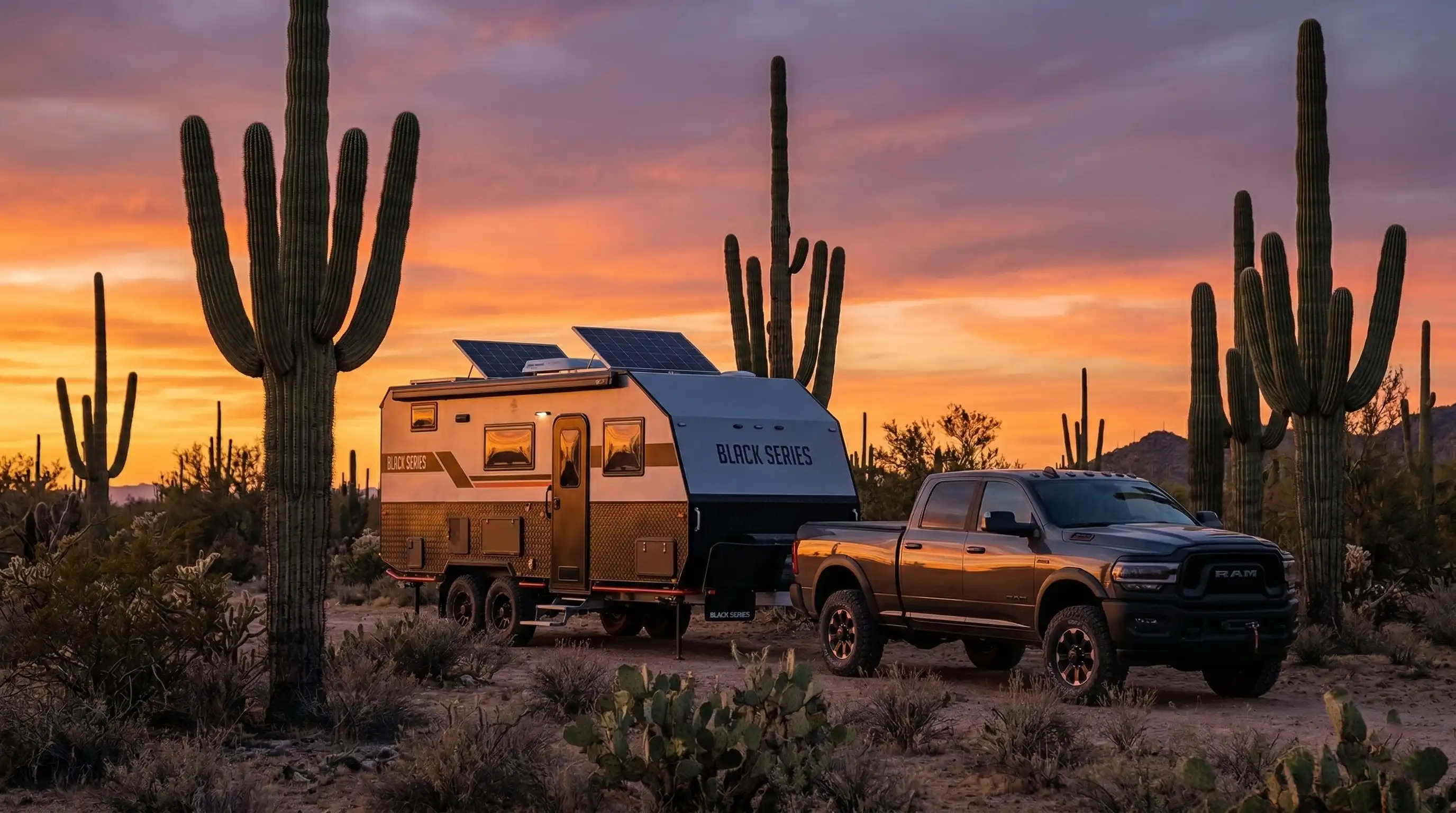
The Arizona Challenge: Heat, Dust, and Power
Arizona boondocking is a test of your rig's engineering. Between the high UV index that degrades sealants and the fine caliche dust that clogs air filters, this environment demands a proactive maintenance schedule. Our 'Top 10' list isn't based on scenery alone; it is curated for technical viability, cellular reach (specifically Band 12 and 71 for T-Mobile or Band 13 for Verizon), and proximity to non-potable water sources for secondary systems.
1. Kofa National Wildlife Refuge (Perimeter BLM)
The Kofa mountains provide an incredible backdrop, but the real value is in the 'Signal Bounce.' By positioning your rig approximately 1.5 miles from the southern cliff faces, you can often catch a reflected 5G signal that would otherwise be shielded. Note: Kofa is strictly managed; ensure your tires are within 100 feet of the centerline of designated roads. Solar gain here is near-perfect, with an average of 6.2 peak sun hours in the winter months.
2. Mittry Lake Wildlife Area (Yuma)
This is a high-humidity anomaly in the desert. The proximity to the Colorado River means you must manage condensation within your rig to prevent mold. For the technical boondocker, Mittry Lake offers an opportunity to test water filtration systems on high-turbidity water. Use a 1-micron sediment filter followed by a 0.5-micron carbon block and UV-C sterilization if you are pulling from the lake for shower use.
3. Plomosa Road (Quartzsite)
While the main Quartzsite LTVAs (Long Term Visitor Areas) are crowded, Plomosa Road to the north offers better spacing. The ground here is a 'Desert Pavement' of small rocks, which is excellent for stabilizing heavy rigs. However, this rock surface acts as a giant radiator. Use a laser thermometer to monitor your tire temperatures; the ground can reach 140 degrees Fahrenheit, which can accelerate tire dry-rot if you are stationary for the full 14 days.
4. Saddle Mountain (Tonopah)
Saddle Mountain is a rockhound’s paradise but a logistical challenge for Starlink users due to the jagged peaks to the west. To maintain a constant 150Mbps+ downlink, you must find a site at least 500 yards east of the primary volcanic outcroppings. The soil here is highly conductive; ensure your rig is properly grounded to prevent static buildup during the frequent dry lightning storms that roll through the Harquahala Valley.
Managing 1000Ah+ Lithium Banks in the Desert
If you are running a substantial LiFePO4 bank (e.g., 4x Battle Born Gamechangers), Arizona's heat is your primary enemy. While lithium can discharge up to 140°F, charging should be throttled once the internal cell temperature hits 113°F to prevent accelerated degradation. We recommend an active ventilation system for your battery compartment, triggered by a 12V thermostat. If your batteries are under-bed or in an uninsulated 'pass-through,' consider adding a dedicated mini-split zone or a phase-change material (PCM) heat sink to buffer the temperature spikes during the 2:00 PM peak.
Water Procurement and Technical Logistics
In Arizona, water is more valuable than lithium. The 'Expert Move' is to utilize the various 'Water Vending' stations in Yuma or Lake Havasu, but to also maintain a 45-gallon collapsible bladder in your tow vehicle. This allows you to 'shuttle' water back to the rig without breaking camp. For waste, the 'Pit Toilet' protocol is for emergencies only. We recommend a macerator pump system that allows you to pump uphill into a portable tote, providing more flexibility in where you park relative to the access road.