
Thermal Management for High-Draw Electronics
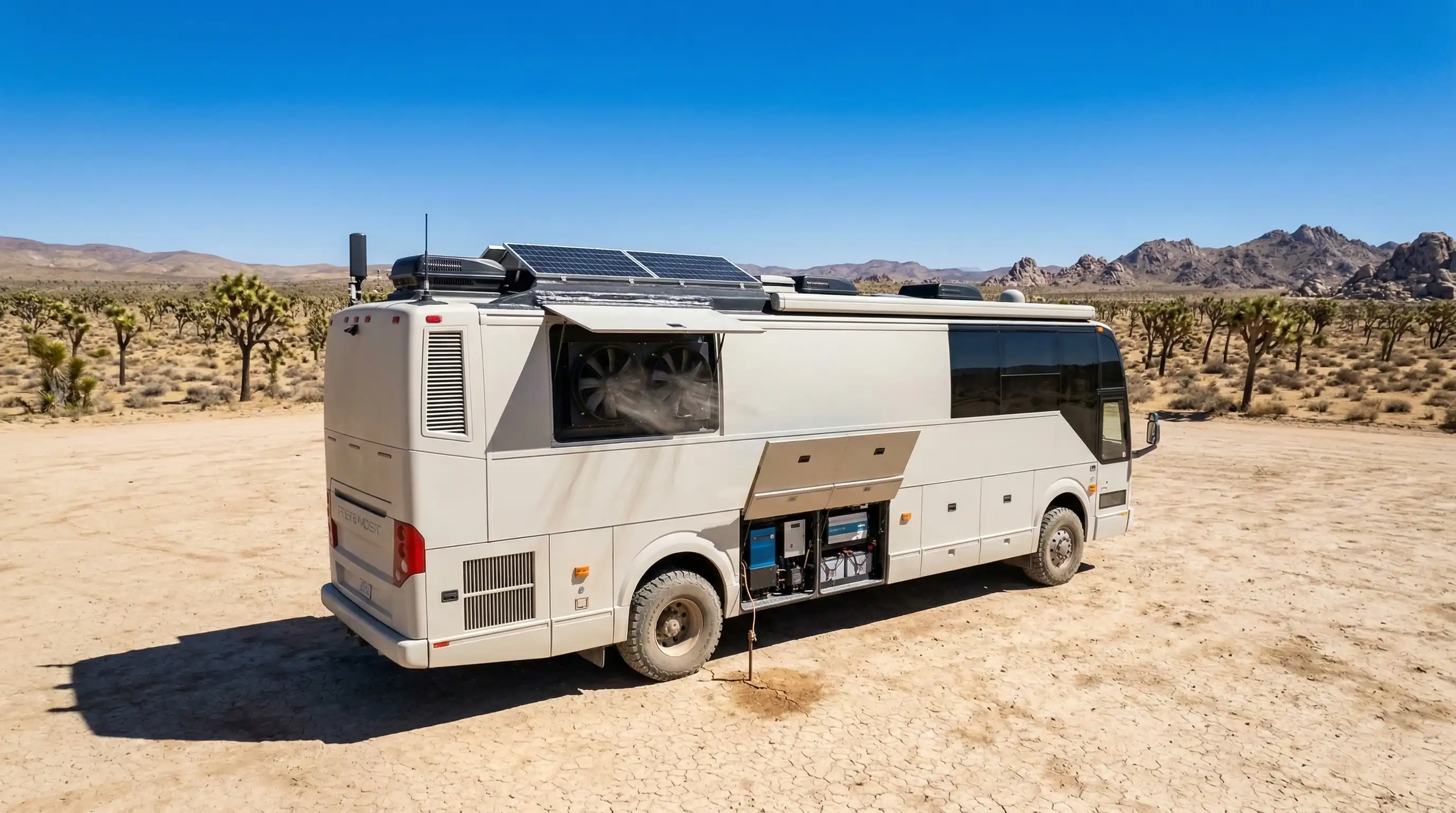
In the Mojave Desert, where ambient temperatures can exceed 110°F, your inverter and solar charge controllers are at high risk of 'thermal derating.' A Victron MultiPlus, for example, will significantly reduce its output as its internal temperature rises. To maintain your 3000W output for air conditioning or induction cooking, you must implement 'active cooling' in your electronics bay. This involves a high-static-pressure 12V fan system (like those from Noctua) and a dedicated intake/exhaust vent. Without this, your $2,000 inverter is effectively a 1500W unit during the peak of the day. Furthermore, ensure your lithium batteries are not charging if their internal temp exceeds 113°F, as this can lead to accelerated electrolyte breakdown.
The Caliche Soil Earthing Challenge
One of the most overlooked aspects of desert boondocking is electrical grounding. The Mojave is home to 'caliche'—a hardened, calcium-carbonate-rich layer of soil that is almost entirely non-conductive. A standard 3-foot ground rod will offer virtually zero protection against static buildup or surges. For those running sensitive Starlink gear or high-gain antennas, we recommend a 'grounding plate' or a 'chemical ground rod' that uses moisture-retaining salts to create a low-resistance path to earth. This is critical for preventing 'hot skin' syndrome on your rig during the dry, static-heavy windstorms common in the Mojave.
UV Degradation and Sealant Integrity
The UV index in the Mojave can reach 11+, which acts like a slow-motion blowtorch on your rig's exterior. Standard Dicor or silicone sealants will crack and fail within 12 months in this environment. Experts should be utilizing 100% UV-stable products like 3M 5200 or Eternabond tape for all roof penetrations. Additionally, your solar panel 'backsheets' are susceptible to UV-induced yellowing, which reduces efficiency. We recommend applying a ceramic coating to your solar panels once a year to increase their hydrophobicity and provide a sacrificial UV layer. Don't forget your tires—UV-reflective covers are mandatory to prevent sidewall dry rot.
Water Logistics and Reverse Osmosis
Water in the Mojave is often extremely hard and high in TDS (Total Dissolved Solids), sometimes exceeding 1,000 ppm. This water will destroy your plumbing and tankless water heater in short order. The expert boondocker utilizes a portable Reverse Osmosis (RO) system for all drinking and cooking water. While RO systems do produce 'brine' (waste water), this can be collected and used for toilet flushing or external cleaning. For your main fresh tank, a high-quality water softener is recommended before the water ever enters your rig. This prevents calcium buildup on your heating elements and ensures your sensors remain accurate.
Legal Nuances: The California 'Fire' Permit
Even if you are not having a campfire, California's BLM districts in the Mojave require a 'Campfire Permit' for the use of any portable stove, including propane. This is a free permit available online, but the 'gotcha' is that you must have a shovel and 5 gallons of water on hand at all times while the stove is in use. Rangers in the Barstow and Ridgecrest districts are known to check for these items during routine patrols. Compliance is the only way to ensure these vast desert tracts remain open to the public.