
The Thermodynamics of Ultralight Shelter
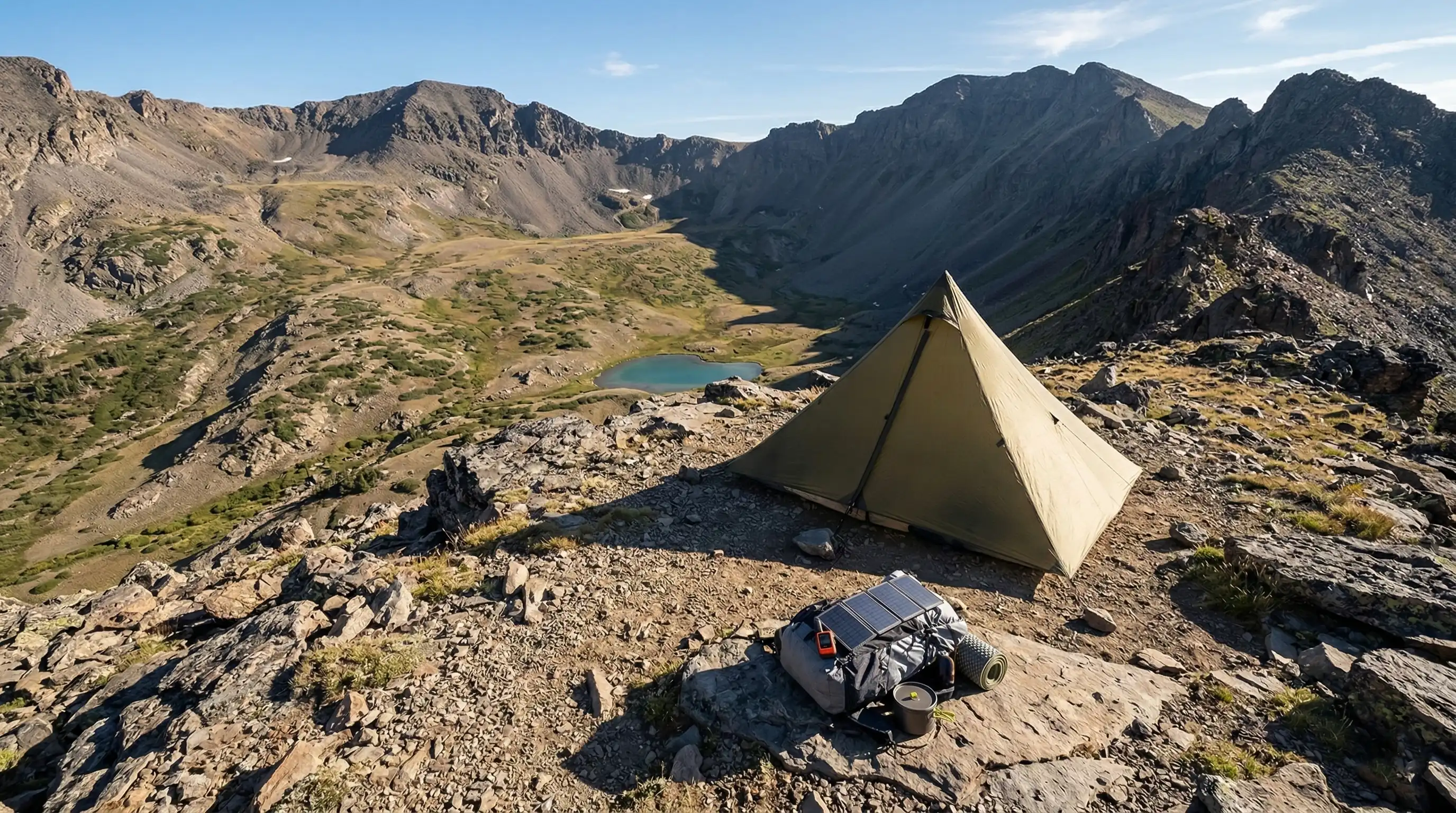
In the high deserts of the 'Great Basin' or the alpine reaches of the 'Steens Mountain' BLM, your tent is a micro-climate. For the veteran backpacker, a standard 'double-wall' tent is too heavy. The expert utilizes a 'Single-Wall' SilPoly (Silicone Polyester) or DCF (Dyneema Composite Fabric) shelter. DCF is the gold standard for 2026: it is 100% waterproof, has zero 'stretch' when wet, and offers a superior strength-to-weight ratio. However, DCF has poor 'breathability.' To manage internal condensation (the 'interior rain' effect), you must utilize 'Active Convection'—positioning the tent's vestibule perpendicular to the prevailing wind to force air through the top vents, a move that requires a deep understanding of localized 'Katabatic' wind patterns.
Calorie Density and Metabolic Math
When 'Tent-Only' boondocking, your fuel is your body. The veteran backpacker calculates their 'Energy Expenditure' using the 'Pandolf Equation,' factoring in pack weight (25-30 lbs), terrain grade, and soil soft-surface coefficients. To maintain metabolic stasis, your food must average 125 calories per ounce. We recommend a 'No-Cook' strategy for 72-hour fast-and-light pushes, utilizing cold-soak methods for dehydrated meals to eliminate the weight of a stove and fuel. If a stove is used, the 'Integrated Canister' system (like the Jetboil Stash) is the only logical choice for high-altitude BLM zones where efficiency is dictated by atmospheric pressure.
Water Procurement: Desalinization and Viral Load
In many BLM 'Wilderness Study Areas' (WSAs), water sources are either 'Alkaline' or 'High-Viral-Load' stagnant pools. A standard 0.1-micron hollow-fiber filter (like the Sawyer Squeeze) will NOT remove viruses or heavy minerals. The expert veteran utilizes a 'Two-Stage' system: a mechanical filter followed by a 'Chemical Purifier' (like Chlorine Dioxide) or a 'UV-C SteriPen.' If the water is alkaline (high pH), you must use an 'Ion-Exchange' resin to make it potable. Carrying a TDS (Total Dissolved Solids) meter is mandatory; if the TDS is over 1000, no amount of filtering will make the water safe for long-term consumption without causing renal stress.
Low-Trace RF and Communication Logistics
Backpacking doesn't mean you are 'off-grid.' The seasoned expert utilizes a 'Low-Trace' RF setup. This involves an Iridium-satellite-based communicator (like the Garmin inReach Messenger) paired with a high-efficiency 10W folding solar panel. To maximize the 10W output, you must utilize an MPPT-based USB-C controller, which can maintain a 5V/2A charge even in 'Dappled' light. For emergency high-bandwidth needs, a portable Starlink Mini (which weighs only 2.5 lbs) is the 2026 standard, though it requires a 24V-to-USB-C PD power bank to handle the 25W operating draw.
BLM 'Wilderness' Mandates and LNT 2.0
Under 43 CFR Part 6300, 'Wilderness' BLM land prohibits motorized or mechanical transport (including mountain bikes). Tent-only veterans must be masters of 'LNT 2.0' (Leave No Trace). This goes beyond packing out trash; it includes 'Acoustic LNT' (zero speaker usage) and 'Visual LNT' (utilizing earth-tone gear to blend into the landscape). In 2026, 'Waste Bags' (WAG bags) are a legal requirement in many high-traffic backpacker paradises (like the Escalante). Burying waste is a violation of 'Resource Management' protocols; everything that goes in, must come out—including food scraps, which can alter the behavior of local 'Problem Bears' and coyotes.