

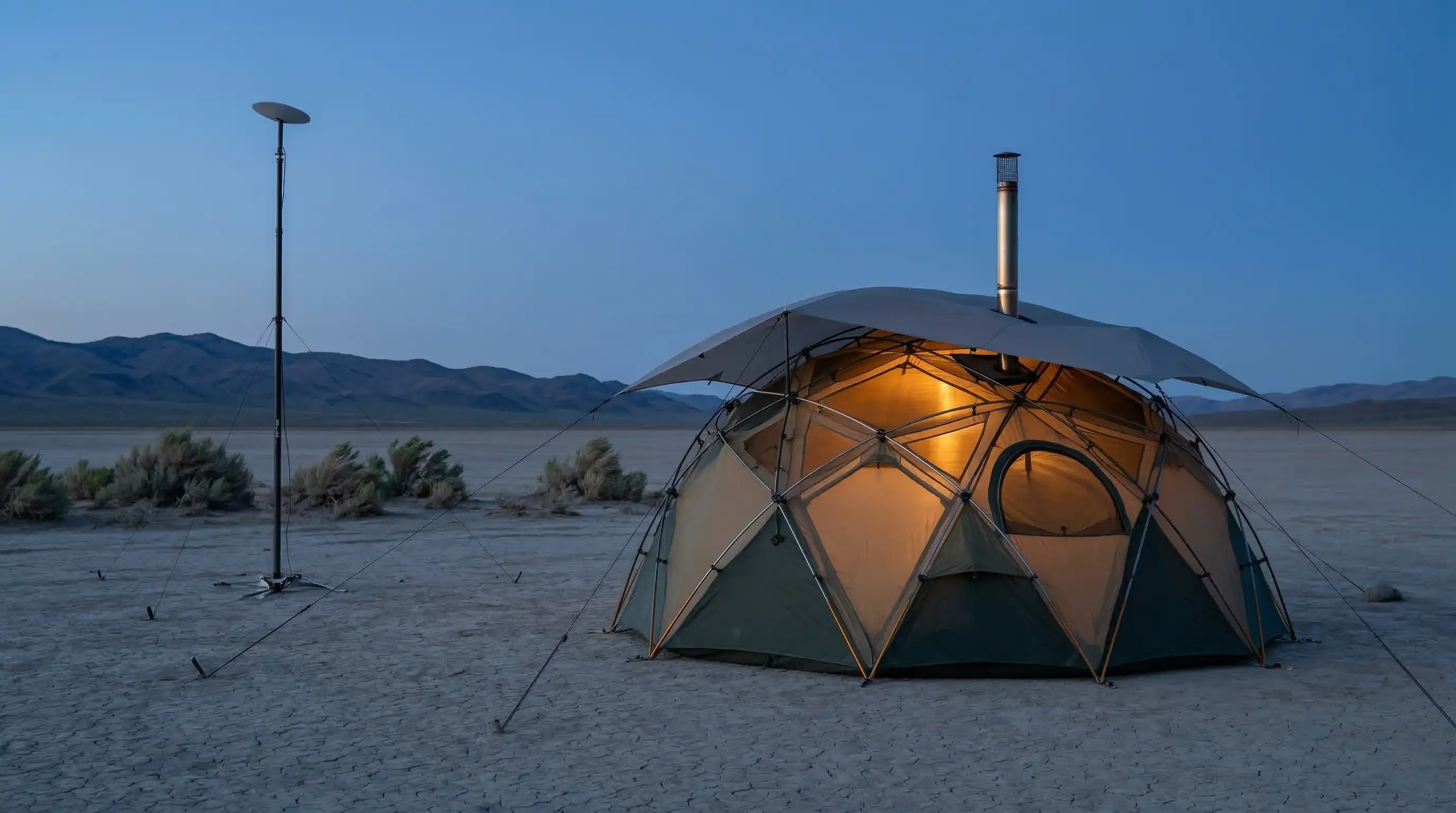
Structural Mathematics: Geodesic vs. Tunnel Designs
When deploying a ground shelter on exposed BLM land, such as the Alvord Desert or the high plains of Wyoming, the primary threat is kinetic wind force. Standard dome tents rely on flexible fiberglass poles that deform and snap under sustained 50 mph gusts. The expert boondocker utilizes pure geometric strength. A true geodesic tent design relies on multiple intersecting poles (usually DAC Featherlite NSL aluminum) that create a matrix of interlocking triangles. This architectural framework distributes wind shear across the entire surface of the canopy, drastically increasing the shelter's load-bearing capacity. Alternatively, alpine-style tunnel tents can be utilized, but they require precise orientation; the narrow aerodynamic profile must face perfectly into the prevailing wind vector. Failure to orient a tunnel tent correctly will result in immediate broadside collapse when the katabatic winds funnel down the canyon walls at dusk.
Material Science: DCF and UV Degradation
Weight-conscious veterans often turn to Dyneema Composite Fabric (DCF) for its unparalleled strength-to-weight ratio and absolute waterproof integrity. However, using DCF in the high-UV environments of the Southwest BLM districts introduces significant material science challenges. While DCF will not stretch or absorb water like SilNylon, its Mylar carrier layers are highly susceptible to UV-induced delamination over prolonged exposure. An expert setup mandates a 'sacrificial layer.' If establishing a multi-day basecamp, a highly UV-resistant SilPoly (Silicone-impregnated Polyester) tarp must be rigged above the DCF tent to absorb the brunt of the solar radiation. SilPoly exhibits far less UV degradation and thermal sag than nylon, ensuring the expensive DCF shelter remains pristine and structurally sound.
Thermodynamics of 'Hot Tenting'
Winter boondocking on BLM land elevates the stakes. 'Hot tenting'—using a portable titanium or stainless steel wood stove inside a specialized canvas or sil-nylon tent—is the definitive method for maintaining thermal autonomy when solar harvest is zero and lithium batteries are too cold to discharge. The thermodynamics require precise management of makeup air. A wood stove consumes immense amounts of oxygen; the tent must feature low-level venting to allow fresh air to replace the exhausted draft, preventing carbon monoxide buildup. Furthermore, the stove pipe must exit through a high-temperature silicone 'stove jack' to prevent the tent fabric from melting. You must precisely manage the draft damper to achieve a secondary burn, which maximizes heat output from minimal fuel scavenged from the dead-and-down timber on BLM land.
Legal Mandates for Spark Arrestors and Fire Bans
Under BLM regulations (specifically enforcing 43 CFR Part 9212), the use of a wood stove inside a hot tent classifies as an open flame or campfire equivalent. Every stove pipe must be capped with a federally approved mesh spark arrestor (typically 1/4-inch or smaller screen). Operating a hot tent without this arrestor in a dry sagebrush environment is an act of extreme negligence and carries severe federal penalties. Furthermore, veterans must consult the local Interagency Fire Center data. If 'Stage 2' fire restrictions are active, hot tenting is strictly prohibited, regardless of how much snow is on the ground. Compliance is non-negotiable; advanced scouts rely on propane-catalytic heaters (with active O2 sensors) as a legal fallback during strict burn bans.
RF Autonomy and Portable Mast Integration
A tent camper does not have the luxury of a hard-sided RV roof to mount a Starlink terminal or a MIMO antenna. Ground-level deployment is useless in deep brush or undulating terrain due to Fresnel zone obstruction. The technical solution is a lightweight, telescoping carbon-fiber mast (often adapted from ham radio applications). By anchoring a 20-foot mast using specialized soil-screws (rather than standard tent pegs which will pull out of loose sand), the camper can elevate their RF equipment above the immediate ground clutter. The Starlink Mini or a cellular directional antenna is mounted to the apex, powered by a weather-sealed LiFePO4 power station at the base, ensuring global connectivity even from a nylon fortress 50 miles off the pavement.